
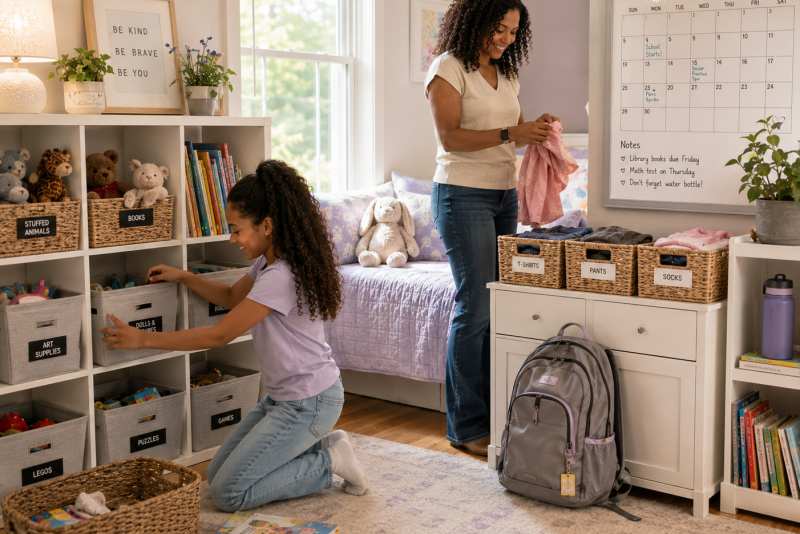
If you’ve ever suggested organizing your child’s room and were immediately met with, “But I need that!” or “Don’t throw it away!” you’re certainly not alone.
For many parents, organizing a child’s room feels like one of the most challenging projects in the home. Toys, books, stuffed animals, art supplies, school projects, and clothes all seem to multiply overnight. Add emotions into the mix, and what started as a simple afternoon project can quickly become overwhelming for everyone.
The good news is that organizing a child’s room doesn’t have to end in frustration. With the right approach, it can become an opportunity to teach valuable life skills, encourage independence, and create a space your child genuinely enjoys spending time in.
At Lavender Organizes, we’ve learned that the most successful organizing projects involve the entire family. When children are part of the process, they’re much more likely to maintain the systems you create together.
Start With the Right Mindset
One of the biggest mistakes parents make is trying to organize everything in one day.
A room that’s been collecting toys, books, clothes, and keepsakes over several years deserves more patience than a quick afternoon allows.
Instead of setting the goal to finish the entire room, focus on making steady progress.
Maybe today you organize the bookshelf.
Tomorrow you sort through the toy bins.
Next weekend you review clothing.
Breaking the project into smaller steps keeps everyone feeling encouraged instead of overwhelmed.
Involve Your Child From the Beginning
Children are far more willing to take care of spaces they helped create.
Rather than organizing everything while they’re away, invite them to participate.
Ask simple questions like:
“Which toys do you play with the most?”
“Which books are your favorites?”
“Where do you think your art supplies should go?”
Giving children age-appropriate choices helps them feel included and respected throughout the process.
It also teaches them how to make thoughtful decisions about their belongings.
Focus on What They Love Today
Children grow quickly, and so do their interests.
A puzzle that was exciting two years ago may no longer hold their attention.
The same goes for books, games, costumes, and stuffed animals.
Instead of asking what should leave the room, ask what they truly enjoy using now.
This small change in perspective often feels much more positive for children.
It shifts the conversation toward making room for the things they genuinely love.
Create Simple Categories
Once you’ve identified the belongings your child uses regularly, group similar items together.
Common categories include:
- Building toys
- Dolls and action figures
- Arts and crafts
- Books
- Puzzles
- Board games
- Stuffed animals
- Dress-up clothes
- School supplies
Grouping similar items makes it much easier for children to know where everything belongs.
It also helps parents quickly see when a storage area is becoming too full.
Use Storage That’s Easy for Children
One of the best organizing strategies is choosing storage your child can use independently.
Open baskets, low shelves, labeled bins, and accessible drawers all encourage children to put items away without needing help every time.
For younger children, picture labels can be especially helpful.
A photo or simple illustration lets them identify where belongings belong even before they can read.
Keep Favorite Items Within Reach
Think about what your child uses every day.
Favorite books.
Building blocks.
Art supplies.
Special stuffed animals.
These items should be stored where they’re easy to access.
Less frequently used belongings, such as seasonal decorations, keepsakes, or specialty toys, can be stored on higher shelves or in nearby storage areas.
Making everyday favorites accessible encourages children to use the organizing system consistently.
Make Room for Creativity
A child’s room should support more than storage.
It should also encourage imagination, learning, and play.
Leave open floor space where children can comfortably build, read, draw, or create.
An organized room isn’t about filling every corner with containers.
Sometimes the most valuable feature is simply having space to enjoy the room itself.
Rotate Toys Throughout the Year
Children don’t need every toy available all the time.
Toy rotation is a simple strategy that keeps playtime interesting while reducing overcrowded shelves.
Choose a small selection of toys to keep available.
Store the remaining toys in labeled bins.
Every few months, rotate them.
When toys return after a break, they often feel exciting all over again.
This approach also makes it easier to appreciate what your child truly enjoys playing with.
Celebrate Progress Instead of Perfection
Children are still learning.
Their rooms won’t stay perfectly organized every day, and that’s completely normal.
Instead of expecting perfection, celebrate small successes.
Maybe they returned their books to the bookshelf.
Maybe they remembered where their art supplies belong.
Maybe they placed their shoes in the basket by themselves.
These small habits build confidence over time and encourage children to continue taking responsibility for their space.
Create Easy Daily Routines
Organization becomes much easier when it’s supported by consistent routines.
Encourage simple habits such as:
- Returning toys before bedtime.
- Placing books back on the shelf after reading.
- Hanging tomorrow’s outfit where it’s easy to find.
- Putting backpacks in the family drop zone after school.
These quick routines take only a few minutes but help maintain an organized room throughout the week.
Give Keepsakes Their Own Home
Many children have drawings, awards, favorite crafts, or sentimental treasures they’d like to keep.
Instead of allowing these items to spread throughout the room, create one special keepsake box or memory bin.
This gives children permission to save meaningful items while keeping everything together in one designated place.
It’s also a wonderful way to preserve family memories without overcrowding shelves or drawers.
Remember That Every Child Is Different
Some children naturally enjoy organizing.
Others need a little more guidance and encouragement.
That’s okay.
The goal isn’t to create identical rooms for every child.
The goal is to create systems that match each child’s personality, age, and daily routine.
An organizing system that works beautifully for one child may look completely different for another.
The best system is the one your child can use confidently and consistently.
When Professional Organization Can Help
Sometimes families simply need a fresh perspective.
A professional organizer can help create age-appropriate systems, maximize available storage, and design spaces that grow alongside your child.
At Lavender Organizes, we work closely with families to create organizing solutions that are practical, personalized, and realistic for everyday life.
Our goal is to help children feel proud of their spaces while making life easier for parents too.
Organizing a child’s room doesn’t have to become a stressful experience.
By involving your child, creating simple systems, and focusing on steady progress instead of perfection, you can create a space that supports learning, creativity, and independence.
Every organized shelf, labeled basket, and designated storage area helps children build habits they’ll carry with them for years to come.
The journey doesn’t have to happen all at once.
Start with one shelf.
One basket.
One category.
Before long, you’ll have a room that feels welcoming, functional, and ready to grow alongside your child.
From smart storage solutions to mindful decluttering, each of these tips helps you get one step closer to a calmer, more efficient lifestyle. And when you’re ready for a deeper transformation, the best professional organizing services in Alexandria, VA, are ready to help.
Need help getting started?
Contact Lavender Organizes today for a free consultation.
Let’s turn your small space into a beautifully organized home you’ll love coming back to.