Every family has paperwork that matters.
Birth certificates, insurance policies, passports, medical records, tax documents, and home ownership papers are just a few of the records that play an important role throughout life. Yet for many households, these documents are stored in several different places, making them difficult to locate when they’re needed.
You may have some papers tucked away in a kitchen drawer, others stored in a filing cabinet, and a few important records sitting in a stack on your desk. It often happens gradually, and before long, finding one specific document can become a frustrating experience.
The good news is that organizing family documents doesn’t have to be complicated. With a simple system that fits your household, you can save time, reduce stress, and feel confident knowing that important information is always within reach.
At Lavender Organizes, we believe that organization is about creating systems that make everyday life easier. Organizing paperwork may not be the most exciting project, but it is one of the most valuable investments you can make for your family.
Why Document Organization Matters
Life is full of unexpected moments.
You may need to provide medical records for a doctor’s appointment, locate insurance information after a storm, renew a passport before a trip, or gather financial paperwork during tax season.
When these situations arise, having an organized document system allows you to focus on the situation itself instead of searching through piles of paperwork.
Knowing exactly where your important records are stored also provides a sense of confidence and preparedness.
It is one less thing to worry about when life becomes busy.
Gather Everything in One Place
The first step is simple.
Walk through your home and gather all important paperwork into one location.
Look in places such as:
- Kitchen drawers
- Home office desks
- Filing cabinets
- Bedroom dressers
- Storage boxes
- Fireproof safes
- Bookshelves
Seeing everything together gives you a better understanding of what you have and what still needs a permanent home.
Don’t worry about organizing immediately.
Simply gathering everything is already meaningful progress.
Create Clear Categories
Once everything is together, begin sorting papers into categories.
Some common categories include:
- Personal identification
- Medical records
- Insurance policies
- Financial records
- Tax documents
- Home ownership records
- Vehicle information
- School records
- Legal documents
- Pet records
Grouping similar documents together makes them much easier to locate in the future.
It also helps you recognize duplicate paperwork or outdated records that no longer need to be kept.
Decide What Should Stay on Paper
Not every document needs a printed copy, but some records are worth keeping in their original form.
Examples include:
- Birth certificates
- Marriage certificates
- Social Security cards
- Passports
- Property deeds
- Wills
- Trust documents
- Vehicle titles
These original documents should be stored in a secure location where they are protected and easy to access when necessary.
Create Digital Backups
While original documents are important, digital copies provide an extra layer of security.
Consider scanning important paperwork and storing encrypted copies in a secure cloud storage service or an external hard drive.
Having digital backups can be especially helpful if original documents are ever damaged or temporarily unavailable.
Just remember that digital files should also be organized into clearly labeled folders so they remain easy to locate.
Use a Filing System That Makes Sense
One of the biggest mistakes people make is creating a filing system that is too complicated.
Your system should be simple enough that every family member knows where documents belong.
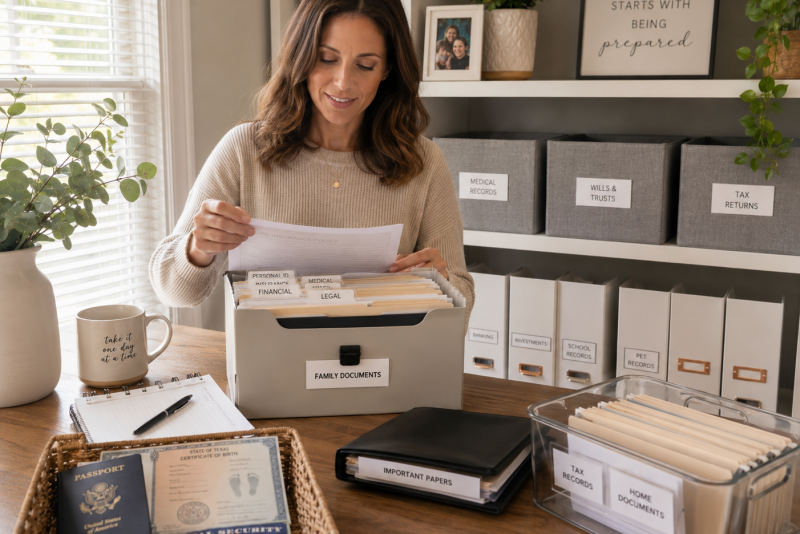
Whether you use a filing cabinet, portable file box, or accordion folder, organize files with clear labels.
Examples include:
- Home
- Insurance
- Medical
- Taxes
- Banking
- Education
- Vehicles
- Family Records
A straightforward system is far more likely to be maintained over time.
Keep Frequently Used Documents Accessible
Some paperwork is needed more often than others.
Items such as school forms, current insurance cards, or medical information may need to be accessed throughout the year.
Consider creating a separate folder for frequently used documents so they can be found quickly without searching through long-term records.
Set a Regular Review Schedule
Organizing paperwork isn’t something you only do once.
Families naturally receive new documents throughout the year.
Scheduling a review every six to twelve months helps your filing system stay current.
During each review, you can:
- Add new paperwork.
- Remove outdated documents.
- Update emergency contact information.
- Verify insurance information.
- Organize new tax records.
Regular reviews prevent paperwork from becoming overwhelming.
Create an Emergency Information Folder
One of the most valuable additions to your document system is an emergency folder.
This folder can include copies of information that may be needed quickly during unexpected situations.
Examples include:
- Emergency contacts
- Insurance information
- Medical information
- Homeowner information
- Pet care instructions
- Medication lists
- Utility account numbers
Knowing where this information is stored provides additional peace of mind for your entire family.
Keep Privacy in Mind
Family documents often contain personal information.
Store sensitive paperwork in a secure location that protects your family’s privacy.
A locking file cabinet or fire resistant document safe can provide additional security while keeping records organized and accessible.
Choose a location that is protected but still convenient enough to access when needed.
Involve the Whole Family
Organization works best when everyone understands the system.
Take time to explain where important documents are stored and how files are organized.
Older children and other household members should know where to find essential information if needed.
You don’t need to share every document, but making sure trusted family members understand the filing system can be incredibly helpful.
When Professional Organization Can Help
Paperwork often feels overwhelming because it accumulates slowly over many years.
If you’re unsure where to begin or simply don’t have the time to create a system, working with a professional organizer can make the process much easier.
At Lavender Organizes, we help families create personalized document organization systems that are simple, practical, and easy to maintain.
Our goal is to reduce stress by creating solutions that work for your home and your lifestyle.
Organizing family documents may not be the first project that comes to mind when thinking about home organization, but it is one of the most valuable.
Having important records organized means spending less time searching and more time focusing on what matters most.
Start small.
Gather your paperwork.
Create simple categories.
Choose a filing system you can maintain.
With each step, you’ll build a system that brings greater confidence, preparedness, and peace of mind for years to come.
From smart storage solutions to mindful decluttering, each of these tips helps you get one step closer to a calmer, more efficient lifestyle. And when you’re ready for a deeper transformation, the best professional organizing services in Alexandria, VA, are ready to help.
Need help getting started?
Contact Lavender Organizes today for a free consultation.
Let’s turn your small space into a beautifully organized home you’ll love coming back to.